


Insights from the Experts
Stay informed with expert commentary, analysis, and thought leadership in aviation safety, accident litigation, and human factors psychology.
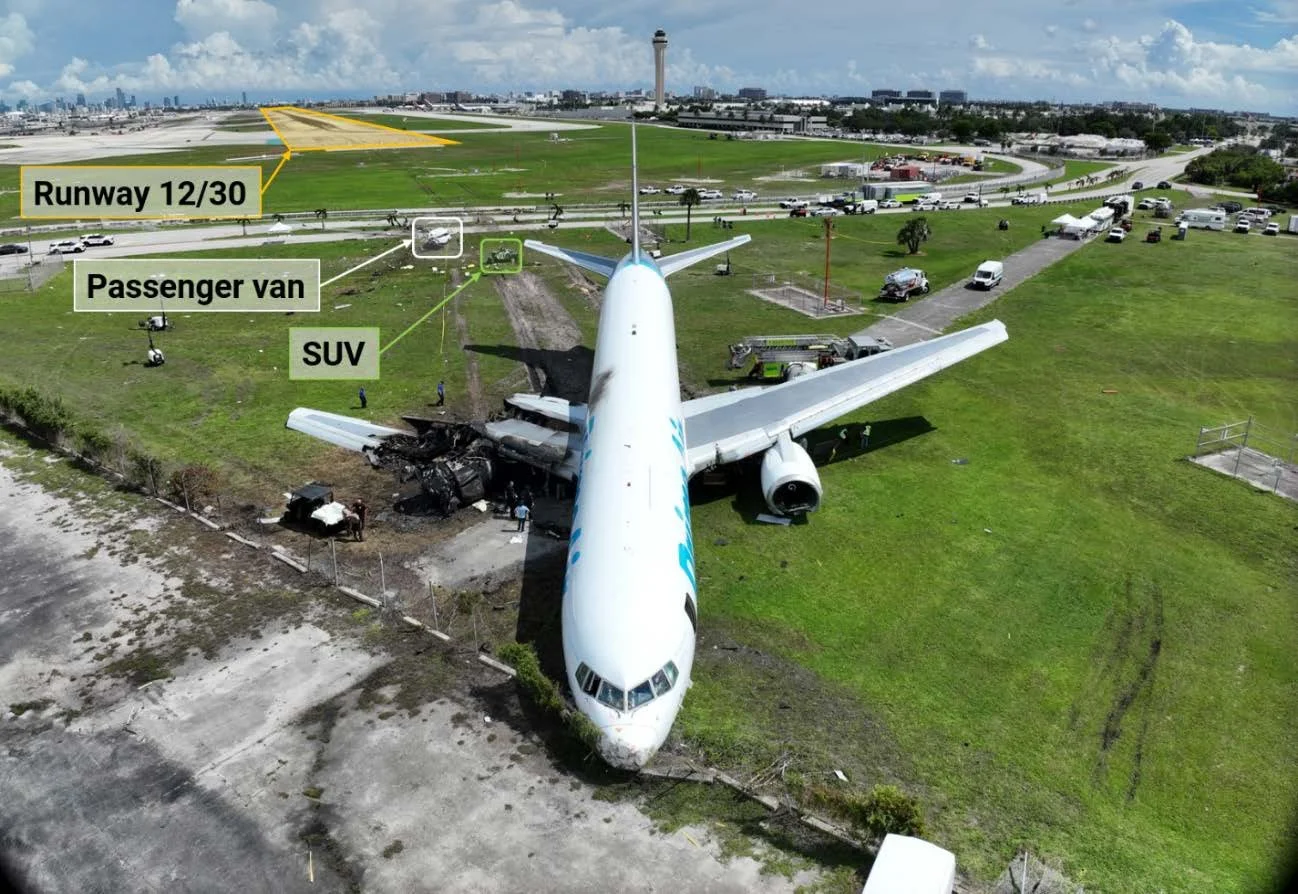
The Miami 767 Overrun: Too Fast, Too Long, and a Late Decision
On 6 September 2026, 21 Air Flight 7598, a Boeing 767-33A freighter (N1997A) flying for Amazon from San Juan to Miami, overran the end of Runway 30 at Miami International Airport and struck two vehicles. Five people on the ground were killed, and three were seriously injured. Both pilots had minor injuries. The airplane was substantially damaged, with a post-impact fire on the right wing (National Transportation Safety Board [NTSB], 2026b). Probable cause awaits the final report. But the recorder data already describe a high-energy approach that never became a stable landing, and a go-around attempt that began well into the landing roll.
A Door Built for the Wrong Threat: What FZ1073 Exposes About Post-9/11 Flight-Deck Security
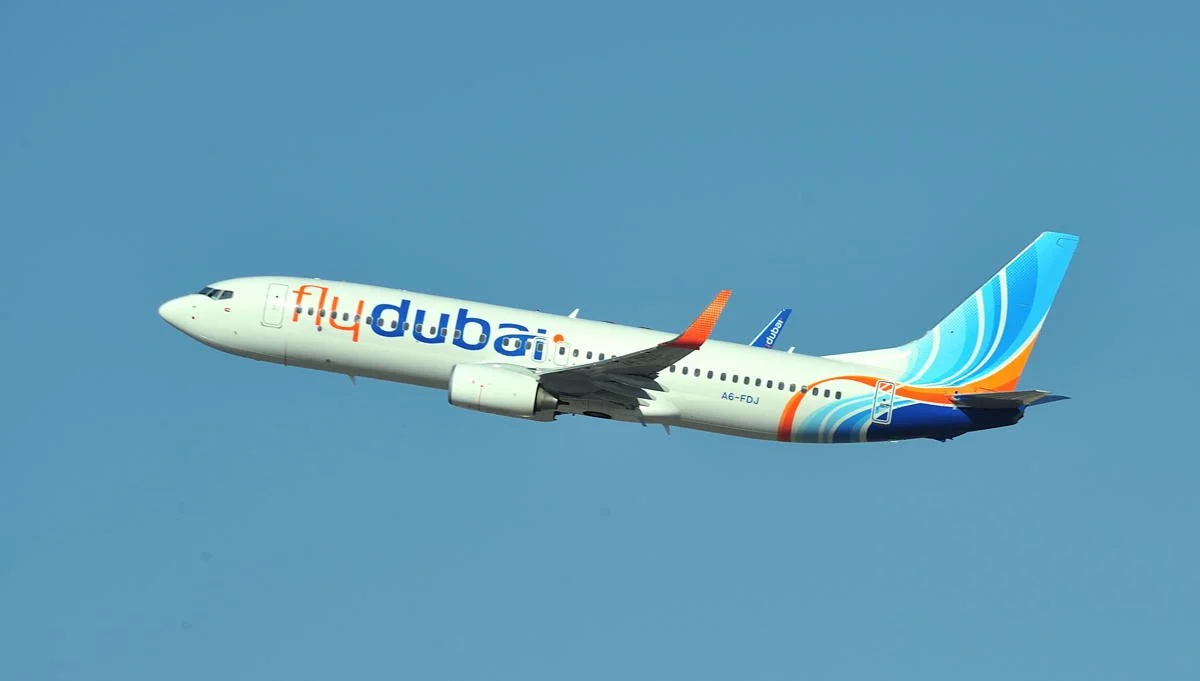
On Wednesday morning, September 30, a flydubai Boeing 737 MAX left Dubai International on Flight FZ1073 bound for Tel Aviv with 174 people on board, most of them Israeli, including children. About two and a half hours later, the aircraft descended violently. Flightradar24's own tracking data, which the company posted directly, showed the jet falling from a cruising altitude of roughly 34,000 feet to somewhere in the 16,600–19,000-foot range in under a minute. After reviewing the flight data, I estimate the loss at roughly 20,000 feet in 30 seconds to a minute, which suggests the aircraft may have exceeded its maximum operating speed by as much as 100 knots. Images taken after landing show a section of the rudder torn away; Other aviation-safety commentators have attributed that to the aerodynamic forces of the dive itself, not an external strike, which makes sense to me, though investigators will have to confirm the timing and cause. The jet then flew an erratic path near the Jordanian border before landing at Tabuk, Saudi Arabia. Everyone on board survived.
A Windshear Warning and Low Fuel Near Disaster
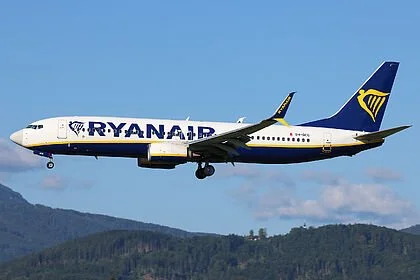
On 3 October 2025, a Malta-registered Boeing 737-800, 9H-QBD, operating for Malta Air on a Ryanair-branded service, left Pisa for Glasgow Prestwick with 171 passengers and six crew, on a day the Met Office had already named Storm Amy. Three wind shear escape maneuvers later, the crew declared "mayday mayday mayday fuel," turned south, and landed at Manchester with about 800 pounds remaining. From the first missed approach to touchdown, the extra flying lasted an hour and forty-five minutes. No one was injured, and the airplane was undamaged.

Different Airplanes, Same Physics
Landing is the phase of flight where an airplane’s design philosophy is most exposed. A Boeing 777 arrives at the runway with a suite of automation—auto speedbrakes, anti-skid, and thrust reversers—engineered to absorb an enormous amount of kinetic energy with minimal pilot input. A light aircraft, for example, a Cessna 402, arrives with none of that. It has a pilot, some drag, and two brake pedals. Both aircraft are trying to solve the same problem; they just have very different toolkits, and very different consequences when the toolkit is misused.

FAA Upgrades, Automation, and Why Manual Flying Skills Still Matter
As an old pilot now with over 50 years in the cockpit, I’ve watched technology reshape the flight deck in ways my instructors from the 1970’s could only imagine. The latest wave of FAA modernization is laying a whole new layer of improvement on the profession. It’s not just another incremental upgrade; it’s a systemic overhaul aimed at dragging America’s air traffic control into the 21st century.

767 Clips the Turnpike at Newark
On May 3, 2026, United Airlines Flight 169, a Boeing 767-400ER arriving from Venice, Italy, was on short final to Runway 29 at Newark Liberty International Airport when its landing gear and underside struck a light pole and then a bakery delivery truck on the New Jersey Turnpike.

The LaGuardia Collision
On the night of March 22, 2026, Jazz Aviation Flight 8646 — operating as Air Canada Express — was on a routine final approach to LaGuardia's Runway 4. The CRJ-900 carried 72 passengers and four crew members inbound from Montréal, and by all accounts, the flight had been unremarkable right up until it wasn't.

The Kuwaiti F/A-18 Friendly Fire Incident: Analysis of the Three F-15E Shootdown
On the evening of March 1, 2026 (early morning March 2 local time), three U.S. Air Force F-15E Strike Eagles were lost over Kuwaiti airspace in what U.S. Central Command described as an apparent friendly fire incident. All six crew members—pilots and weapons systems officers—ejected safely and were recovered in stable condition. The aircraft losses were catastrophic. The human cost, mercifully, was not.

Washington Reagan National Airport Midair Collision: A Year Later
The picture that emerges is darker than the early speculation suggested. While misidentification and technology limitations played their predictable roles, the real story is institutional failure—warnings ignored, proposals shelved, capacity prioritized over safety. The aircraft and their crews were set up to fail by a system that saw the collision coming and looked away.


UPS MD-11 Crash
UPS Airlines Flight 2976, operated by a McDonnell Douglas MD-11 freighter, crashed on November 4, 2025, shortly after takeoff from Louisville Airport in Louisville, Kentucky, en route to Honolulu, Hawaii. The incident occurred around 5:20 PM ET, resulting in at least 13 fatalities, including the three crew members, and marking the deadliest accident in UPS Airlines’ history.

Aerodynamic Stall
Aerodynamic stall is one of the most critical phenomena in aviation. In this regime, the wing’s lift production fails due to excessive angle of attack (AOA), leading to potentially catastrophic consequences. For pilots, understanding stall characteristics is not merely academic; it is a cornerstone of safe flight operations across diverse aircraft types. This article examines the aerodynamic principles of stalls, drawing on two recent incidents—the Hawker 800XP crash near Lansing, Michigan, on October 16, 2025, and the Piper Aztec accident near Barnes Airport, Massachusetts, on October 27, 2024, which potentially involved icing—to illustrate the real-world implications. Additionally, it explores the roles of aviation legal experts and forensic specialists in conducting post-crash investigations and litigation, ensuring accountability and enhancing safety.

Air India Flight 171
On June 12, 2025, Air India Flight 171, a Boeing 787-8 Dreamliner (registration VT-ANB), crashed 32 seconds after takeoff from Sardar Vallabhbhai Patel International Airport, Ahmedabad, India, en route to London Gatwick. Carrying 230 passengers and 12 crew members.

Operation Rising Lion
Operation Rising Lion, executed in June 2025, saw the Israeli Air Force launch 200 aircraft, including F-35I Adir stealth fighters, F-15I Ra’am strike jets, and F-16I Sufa multirole fighters, to strike 100 Iranian nuclear facilities, including Natanz, over a 2,000-kilometer round trip. What made this operation extraordinary was the use of seven KC-707 tankers and four advanced KC-46A Pegasus tankers to refuel fighters over Iranian airspace, a feat requiring unchallenged control of the skies.


Ready to Consult with Us?
Whether you’re preparing a case or need a second opinion, our experts are here to assist.